Sustainable Plant Trade Moves Forward at CITES CoP20
TRAFFIC Co-hosts Side Event to Outline Next Steps for Wild-Harvested Medicinal and Aromatic Plants
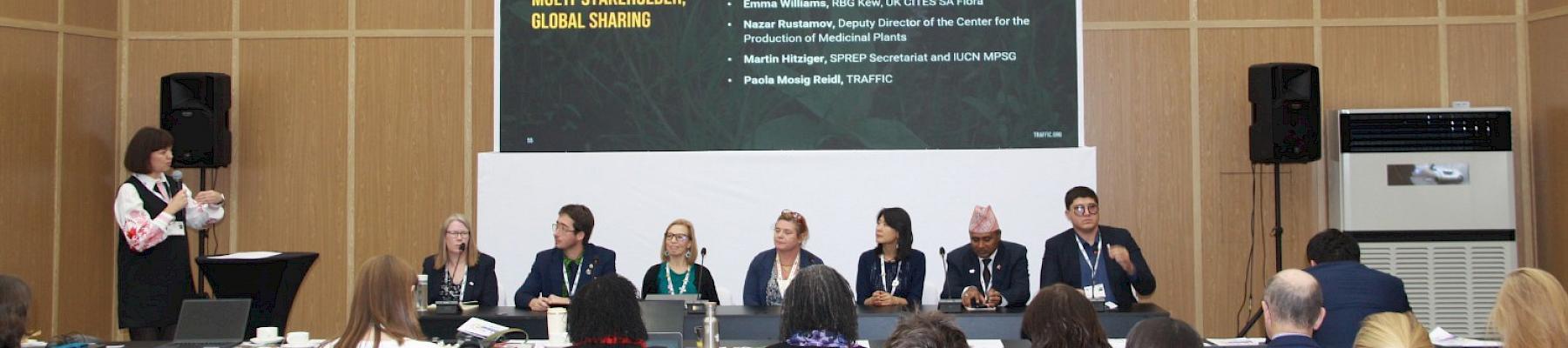
Last week at the CITES CoP20 in Samarkand, TRAFFIC co-hosted a side event to shine a spotlight on the future of CITES-listed Medicinal and Aromatic Plants (MAPs) in global trade. Titled Sustainable Trade in MAPs: Healing Plants, Healthy Trade through Strengthening CITES Implementation for Medicinal and Aromatic Plants, the session brought together government representatives, technical experts, and civil society, to discuss sustainable and legal trade for these vital species.
Held on 3 December, the event tackled the complex challenge of regulating trade for the over 1,500 MAP species listed in the CITES Appendices. Given their critical role in global health systems and the livelihoods of millions, the focus was firmly on how CITES implementation could be strengthened to ensure that trade remains both legal and sustainable.
Despite their widespread global use, medicinal and aromatic plants trade is not well-understood and managed. CITES provides important regulations for a sub-set of the internationally trade species, and with targeted complimentary approaches, contributes to the long-term survival of species and the enhancement of livelihoods.”
Anastasiya Timoshyna, Anastasiya Timoshyna, SHIFT Project Leader and Programme Office Director, Europe (TRAFFIC)
Shared Evidence and Practical Solutions

The session, co-hosted by TRAFFIC, the IUCN SSC Medicinal Plant Specialist Group (MPSG), Royal Botanic Gardens Kew, and the governments of Nepal and the UK, provided a platform for sharing key research and real-world results.
Delegates heard from panellists including Ivonne Higuero, the CITES Secretary General, who delivered opening remarks on the contribution of sustainable trade to both conservation and livelihoods, noting that like no other species, MAPs appear to us all together through their role in health, culture and traditions.
Discussions, moderated by TRAFFIC's Anastasiya Timoshyna, centred on:
- Key Research Findings: RBG Kew and TRAFFIC presented the core findings of a major research document developed for the CITES Secretariat on trade in CITES-listed MAPs—directly supporting the implementation of relevant Decisions and providing essential background for CITES Parties.
- Sustainable Paths for Himalayan MAPs: The event directly followed up on the International Workshop held in Chongqing, China, earlier this year. Dr Yan Zeng, of the Endangered Species Scientific Commission and the CITES Scientific Authority Flora of China shared the workshop’s recommendations for regional cooperation and science-based management. This work is actively charting a new future for sustainable trade in CITES-protected Himalayan medicinal plants.
- A Nepal Case Study: A highlight was the practical demonstration of sustainable trade through the example of Jatamansi (Spikenard) in Nepal. Ajeet Karn - Province Secretary, Ministry of Industry, Tourism, Forest & Environment, Karnali Province, Nepal, detailed how robust national implementation could effectively conserve species while supporting rural economies.
- Future Priorities: A multi-stakeholder panel, which included representatives from the EU, Uzbekistan, and the South Pacific, discussed practical priorities for the future, including building international momentum for World Wildlife Day 2026.
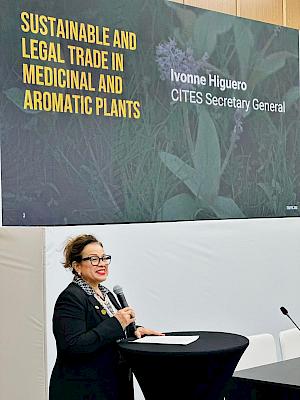
This event reinforces the global commitment to implementing CITES decisions for medicinal and aromatic plants. By sharing scientific evidence and practical solutions, we are ensuring that trade supports both biodiversity conservation and sustainable livelihoods."
Ivonne Higuero, CITES Secretary General
TRAFFIC’s Commitment to Sustainable MAPs
The successful side event underscored TRAFFIC’s commitment to providing the technical expertise needed to ensure trade in wild plants is sustainable.
The shared recommendations are directly supported by our work to scale the conservation of Himalayan plants and fungi through sustainable trade. This project, funded by the UK Government through the Darwin Initiative, is implementing on-the-ground strategies, including a nationwide resource inventory of Appendix-II species such as Jatamansi.
The CITES CoP20 event built on TRAFFIC’s history of exploring innovative policy tools, such as the role of voluntary sustainability certification standards (like FairWild), to support CITES implementation. By strengthening traceability and sustainability assessments, these market tools can help fill knowledge gaps for government regulators and make the trade system more robust for businesses.
Notes:
The side event was supported by the UK Government through Darwin Initiative.
Convention on International Trade in Endangered Species of Wild Fauna and Flora (CITES)

The Convention on International Trade in Endangered Species of Wild Fauna and Flora, is an international agreement between governments that aims to ensure that international trade in specimens of wild animals and plants does not threaten their survival. Find out more here.
About Royal Botanic Gardens, Kew

With over 350 scientists, Kew’s mission is to understand and protect plants and fungi for the well-being of people and the future of all life on Earth. Kew’s structure, research and resources align to five Scientific Priorities, to help them achieve transformative change and maximum positive impact.
About the IUCN Medicinal Plants Specialist Group

The IUCN Medicinal Plants Specialist Group is a global network of specialists contributing within their own institutions and regions, as well as world-wide, to the conservation and sustainable use of medicinal plants. The MPSG was founded in 1994 to increase global awareness of conservation threats to medicinal plants, to undertake Red List assessments of medicinal plants, and to promote sustainable use and conservation action. The Group supports development and implementation of the FairWild Standard to verify sustainable harvesting and trade in wild plants.
About the Darwin Initiative

The Darwin Initiative is a UK government programme with a focus on biodiversity projects.