Ahead of CITES CoP20: Expert Analyses now available
With one of the most important conservation meetings on the planet fast approaching, TRAFFIC and IUCN release research to support decisions on the list of wild species protected from unsustainable exploitation through international trade.
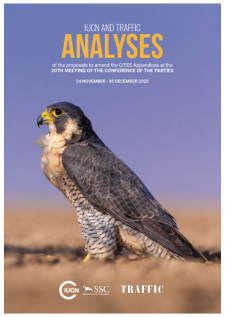
The 20th meeting of the Conference of the Parties (CoP20) for the Convention on International Trade in Endangered Species of Wild Fauna and Flora (CITES) opens in Uzbekistan on 24 November. In advance of this, the technical IUCN/TRAFFIC Analyses of the proposals to amend the CITES Appendices are now available online.
Supporting and advising the CITES decision-making process through robust scientific and technical research is a central part of IUCN and TRAFFIC's work. We provide impartial information on wildlife trade and have partnered to create these evidence-based analyses. They are designed to help CITES Parties as they prepare to meet and decide on the proposals submitted to amend the list of wild species protected from unsustainable exploitation through international trade.
The IUCN/TRAFFIC Analyses offer an expert assessment of each proposed amendment, checking them against the Convention's specific listing criteria. This ensures CITES Parties have unbiased, relevant information to make informed decisions on whether a species meets the requirements for a change to its CITES Appendix status.
What the Analyses Do
The Analyses give a detailed assessment of whether a proposal to change a species’ Appendix status is backed up by evidence.
The CITES Appendices provide different levels of protection for species:
- Appendix I: Prohibits international commercial trade of specimens taken from wild populations of a species.
- Appendix II: Permits international commercial trade from wild specimens of a species, but only under strict control measures.
Drawing on decades of expertise, TRAFFIC provides CITES Parties with rigorous, science-based analyses that support informed decision-making and help safeguard species from the risks of over-exploitation in international trade.”
PAOLA MOSIG REIDL - Co-Lead Of Data, Research, And Enforcement Support at TRAFFIC
Decisions made at the CITES CoP are instrumental in shaping the trajectory of global species conservation. Through the IUCN Species Survival Commission and its extensive network of specialists, IUCN delivers the scientific insight and policy advice needed to guide Parties in addressing the challenges of international wildlife trade.”
SUSANNE PEDERSEN - Director, IUCN Centre for Science and Knowledge at IUCN
The individual proposal analyses will be followed by TRAFFIC’s Briefing Document for CoP20, which will offer reflections and recommendations on all agenda items and listing proposals.
TRAFFIC and IUCN produce reports and analyses on issues that will be discussed on the CoP agenda, such as aquatic and marine species, saiga antelope, peregrine falcons, big cats and Non-detriment Findings. For example, last month, a joint report from IUCN and TRAFFIC was made publicly available, reflecting the state of the Rhinoceroses trade.
Notes:
IUCN and TRAFFIC would like to acknowledge the generous support of the following donors for the production of the Analyses for CoP20: The European Union, Canada, Fondation Franklinia, Ireland, Germany, Monaco, Netherlands, Spain, Sweden, Switzerland, the United Kingdom of Great Britain and Northern Ireland, and WWF International. The Analyses do not necessarily reflect the views of the project’s donors.
About IUCN

IUCN is a membership Union composed of both government and civil society organisations. It harnesses the experience, resources and reach of its more than 1,400 Member organisations and the input of more than 17,000 experts. IUCN is the global authority on the status of the natural world and the measures needed to safeguard it. For more information visit: iucn.org