Moving towards sustainability within Traditional Chinese Medicine
Opportunities to ensure the long-term sustainability of wild-harvested species used in Traditional Chinese Medicine (TCM) were on the table at two landmark events in Hong Kong last month.
 With more than 90% of commonly used TCM ingredients derived from wild or cultivated biological resources, ensuring they are harvested and traded sustainably and in compliance with international legislation is critical for protecting biodiversity and the future of TCM.
The 2025 Hong Kong International Traditional Chinese Medicine Expo (hosted by the Bauhinia Group) and the Medicinal Resources Sustainability - Open Collaboration - Innovation Forum (co-hosted by the University of Hong Kong (HKU), the China Association of Traditional Chinese Medicine (CATCM), and TRAFFIC, marked a significant step toward aligning the TCM sector with global biodiversity conservation and wildlife trade commitments.
In her opening remarks, Ms Wang Guihua, Secretary-General, CATCM, stated:
“As a treasure of Chinese civilisation, TCM is experiencing unprecedented global opportunities, but also faces real challenges in resource sustainability, alignment with international standards, and technological empowerment. This forum comes at a critical moment. We call for three key actions: first, to uphold the bottom line of medicinal resource protection and promote sustainable use; second, to deepen open collaboration and co-build an international discourse system for TCM; and third, to strengthen science and technology integration to accelerate TCM modernisation.”
Ms Ling XU, Director of TRAFFIC China, added:
The future of traditional Chinese medicine must be rooted in sustainability and compliance. With the vast proportion of TCM ingredients coming from wild or cultivated biological sources, the industry bears a profound responsibility to ensure these resources are managed responsibly. The strong engagement from academia, industry, and government at these Hong Kong events demonstrates a shared commitment to transforming TCM into a global model of green, ethical, and science-based practice.”
Held from 25–28 September, the Expo brought together leading enterprises, including Tongrentang, Shanghai Pharmaceuticals, Nin Jiom, and Daren Tang, alongside academic institutions such as Guangzhou University of Chinese Medicine and the HKU School of Chinese Medicine, as well as international representatives from Indonesia, DPR Korea, and Zimbabwe.
A dedicated exhibition booth co-organised by TRAFFIC and the CATCHM showcased collaborative initiatives aimed at eliminating the use of rhino horn and other products derived from endangered species, while promoting the legal and sustainable sourcing of medicinal materials, particularly those originating from the Himalayan region.
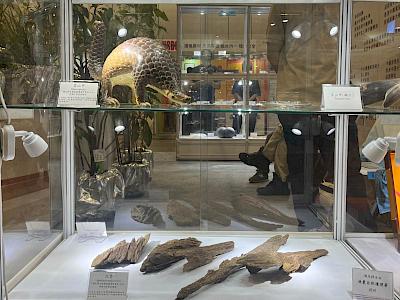
A dedicated CITES education zone, supported by Hong Kong’s Agriculture, Fisheries and Conservation Department, displayed confiscated specimens including rhino horn, pangolin scales, saiga horn, and agarwood to raise public awareness about the legal and ecological risks of using threatened species in medicine.
Discussions centred on implementing the Kunming-Montreal Global Biodiversity Framework and the Convention on International Trade in Endangered Species of Wild Fauna and Flora (CITES) within the TCM supply chain.
The events underscored Hong Kong’s strategic role as an international bridge for TCM, leveraging its strengths in scientific collaboration, financial services, regulatory expertise, and global branding to integrate sustainable TCM into the global health governance framework.
They concluded with a unified call to action: prioritise biodiversity conservation, strengthen international standards alignment, and accelerate innovation ensuring that traditional medicine thrives in harmony with nature.
Notes:
TRAFFIC’s participation in these events was jointly funded through two initiatives: “Protecting Rhinos Phase II-The Rhino Nexus” with funding by the German Federal Ministry for the Environment, Nature Conservation, Nuclear Safety and Consumer Protection (BMUV) via WWF Germany and “Scaling Conservation of Himalayan Plants and Fungi through sustainable trade” funded by the UK Government through the Darwin Initiative.
About China Association of Traditional Chinese Medicine (CATCM)
The China Association of Traditional Chinese Medicine (CATCM), founded in December 2000, is a non-profit organisation made up of TCM companies, research units, universities, and individuals. With 500 enterprise members and over 70 branches, CATCM prioritises the conservation of wild species and ecological balance. The association advocates for sustainable TCM development, promoting the use of artificial breeding and cultivation to protect wild resources from illegal exploitation. CATCM guides the TCM industry toward eco-friendly practices, balancing resource use with biodiversity preservation to ensure the long-term availability of medicinal resources.
About the Darwin Initiative

The Darwin Initiative is a UK government programme with a focus on biodiversity projects.
Federal Ministry for the Environment Germany
Funded by the Federal Ministry for the Environment, Climate Action, Nature Conservation and Nuclear Safety.