Digital Defenders: Kyrgyzstan Arms Law Enforcement Agencies with New Data Tool to Stop Wildlife Smugglers
Data sharing and digital tools are prized innovations in the fight against wildlife crime. Now, Kyrgyzstan is seizing the opportunity to protect its valuable biodiversity, training law enforcement teams to use a brand new database to help stamp out illegal trade in wild species.
Bishkek, Kyrgyzstan. In a major step forward for wildlife protection, Kyrgyzstan has developed a new electronic database to help government agencies detect and prevent wildlife smuggling.
The initiative is supported by TRAFFIC Central Asia in partnership with the Ministry of Natural Resources, Ecology and Technical Supervision of the Kyrgyz Republic and Fauna & Flora.
The stakes are high. Kyrgyzstan is a key source and transit point in Central Asia’s wildlife trade, and several iconic and endangered species are at risk. These include:
Saker Falcons, prized in the Middle East for falconry, often smuggled live across borders
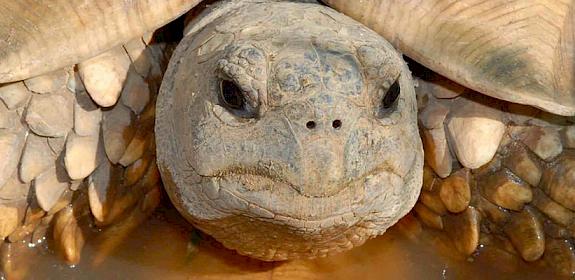
Central Asian Tortoises, trafficked in large numbers for the exotic pet trade
Saiga Antelope, targeted for their horns, which are used in traditional medicine
Argali sheep and Marco Polo sheep, hunted for trophies
The growing illegal wildlife trade not only threatens these species but also fuels transnational organized crime, drives poverty by depriving local communities of resources and livelihoods, and poses a major health risk through spread of zoonotic disease.
This is a powerful and foundational step forward in the fight against illegal wildlife crime. Law-enforcement officials need to keep one step ahead of criminals, and this database will help them to do exactly that.”
Bakytbek Tokubek uulu, TRAFFIC Central Asia
"Through collaboration with Fauna & Flora and TRAFFIC, the Ministry of Natural Resources, Ecology and Technical Supervision of the Kyrgyz Republic organized a series of training sessions for authorized agencies on the use of the CITES electronic database," said Dersuu Akparaliev, chief specialist of the Biodiversity Resource Management Department at the Ministry of Natural Resources, Ecology and Technical Supervision of the Kyrgyz Republic.
These activities are aimed at increasing transparency and the effectiveness of monitoring the trade of wildlife, as well as preventing illegal trade. This initiative has strengthened interagency cooperation and significantly enhanced the capacity to detect and combat the illegal trade of wildlife."
Dersuu Akparaliev, chief specialist of the Biodiversity Resource Management Department at the Ministry of Natural Resources, Ecology and Technical Supervision of the Kyrgyz Republic
The new database will be provided to customs, border control and other concerned offices, allowing authorities to verify permits and check authenticity. Cases of illegal wildlife smuggling are recorded, making it easier to spot suspicious patterns and share information between agencies. It also includes methodology for identifying animal parts and derivatives, indicating the exact species and the required documentation for import/export.
During summer 2025 – even in 41 degrees heat! - TRAFFIC ran hands-on training courses for customs and border officers to help them use the new system.

The workshops, held in Bishkek and Osh, brought together frontline staff from seven provinces. These are the people who inspect cargo, check border crossings, and monitor airports — and their insights were eye-opening.
Some officers admitted they hadn’t previously known about permits from CITES - the global agreement that regulates wildlife trade to prevent species from becoming endangered. Others raised concerns that wildlife checks are often overlooked at airports, where security staff focus more on explosives and weapons than on smuggled animals or plants.
Participants practiced entering real-world data into the system, shared stories from the field, and discussed the challenges of identifying protected species. The sessions also included an introduction to the CITES.
With better tools and training, Kyrgyzstan is taking a meaningful step toward protecting its rich biodiversity. The new database will improve coordination between agencies and boost the country’s ability to safeguard its wildlife for future generations.
The electronic database will be finalized and fully handed over to the Ministry of Natural Resources, Ecology, and Technical Supervision of the Kyrgyz Republic by September 2025. The final version will feature an user friendly interface and include instructional video tutorials.
Further training by TRAFFIC and Fauna & Flora will be provided for law enforcement agencies in Uzbekistan later this year. It will focus on sharing practical experience via the database, exploring the possibility of developing a similar system for Uzbekistan, and fostering dialogue on regional cooperation to combat illegal wildlife trade across Central Asia.
For more information about TRAFFIC's work in Central Asia, please see here.
Notes:
The electronic database is produced within the framework of a project funded by the U.S. Department of State’s Bureau of International Narcotics and Law Enforcement Affairs (INL). The two-year project entitled “Strengthening Capacity & Fostering the Will to Combat Wildlife Crime in Central Asia” is led by Fauna & Flora, in collaboration with TRAFFIC, the Association for the Conservation of Biodiversity of Kazakhstan (ACBK), the Institute of Zoology Academy of Sciences of the Republic of Uzbekistan and the Ecological Resource Centre “Ekomaktab”.
About Bureau of International Narcotics and Law Enforcement Affairs (INL):

Funded by the United States Department of State Bureau of International Narcotics and Law Enforcement Affairs. The opinions, finds and conclusions stated herein are those of the authors and do not necessarily reflect those of the United States Department of State.
The mission of INL is to minimise the impact of international crime, such as money laundering and criminal gangs, and illegal drugs on the United States, its citizens, and partner nations by providing practical foreign assistance and fostering global cooperation. Visit the Bureau of International Narcotics and Law Enforcement Affairs (INL)'s website.